
DRUMMERS WHO INFLUENCED ME:
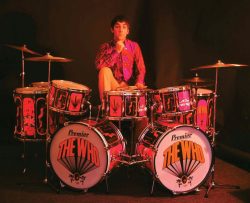
KEITH MOON
Keith Moon was the explosive, highly influential drummer for The Who, and his musical career is defined almost entirely by his work with that band, where he helped reshape what rock drumming could sound like. He started out in London playing in local groups as a teenager, learning the instrument in a self-taught, energetic way and drawing influence from surf rock and jazz drummers. By 1964, he joined The Who after impressing the band with his aggressive, chaotic audition style, which instantly made him a core part of their identity.
From the beginning, Moon stood out for treating the drums not just as rhythm support, but as a lead instrument. His playing on early Who singles and albums like My Generation helped define the band’s raw, loud sound, with fast fills, heavy tom usage, and a constantly shifting, unpredictable style. As The Who developed through the late 1960s, especially on albums like Tommy, Moon’s drumming became more complex and orchestral, often driving the music forward with a kind of controlled chaos rather than steady timekeeping.
In the early 1970s, particularly on Who’s Next, he delivered some of his most powerful studio performances, balancing wild energy with moments of precision that helped shape songs like “Won’t Get Fooled Again.” At the same time, The Who became famous for their intense live shows, and Moon’s theatrical, destructive stage presence—smashing kits, throwing sticks, and playing with almost superhuman energy—became central to their reputation as one of the most exciting live rock bands of the era.
Outside of The Who, Moon had only limited side projects, including film appearances and a solo album, Two Sides of the Moon (1975), but he never pursued a separate solo career in the traditional sense. His identity remained inseparable from The Who throughout his life. By the late 1970s, his health and playing became inconsistent due to heavy substance use, and his final recordings with the band appeared on Who Are You.
He died in 1978 at age 32, but his influence on rock drumming remained enormous. Keith Moon is widely regarded as one of the most original and impactful drummers in rock history, largely because he turned drumming into something theatrical, reactive, and central to a band’s musical identity rather than just a supporting role.
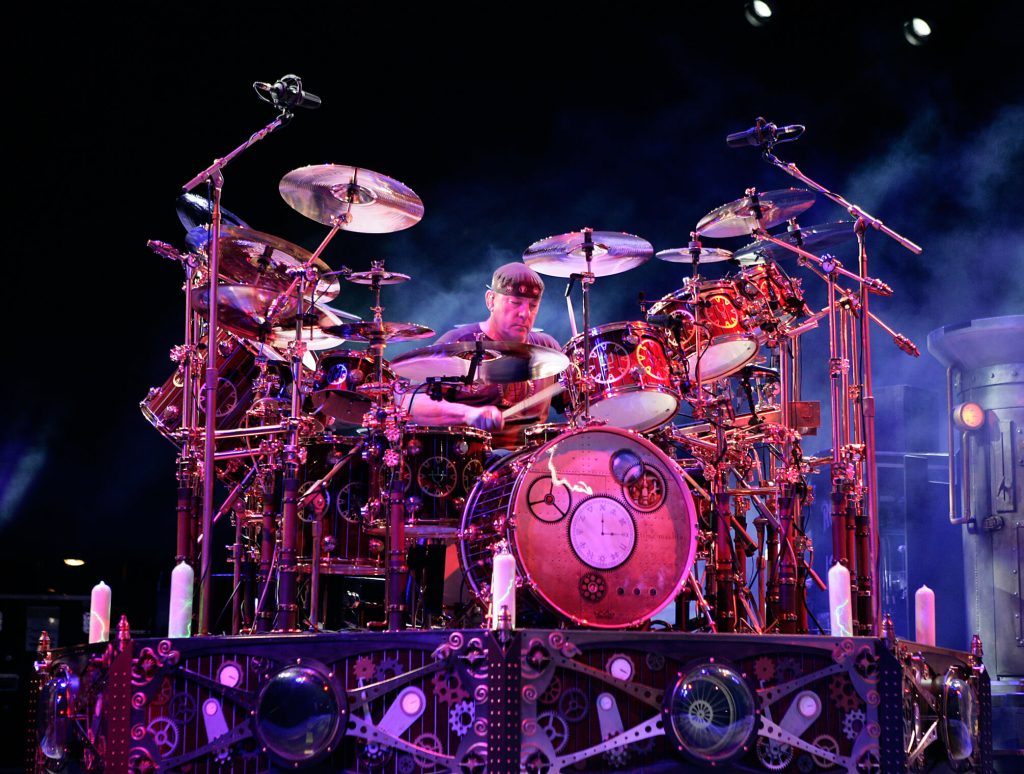
NEIL PEART
Neil Peart was best known as the drummer and primary lyricist for the progressive rock band Rush, where he helped shape both the band’s sound and identity from 1974 until their final tour in 2015. After joining Rush shortly after their debut album, he quickly became recognized for his technical precision, complex time signatures, and highly orchestrated drum parts, which elevated the group from a hard rock trio into one of the most influential progressive rock bands in history. Alongside his drumming, Peart wrote most of Rush’s lyrics, developing intellectually rich themes drawn from philosophy, literature, science fiction, and personal reflection, which became a defining feature of albums such as 2112, Moving Pictures, and Hemispheres.
Over the course of his career, Peart continually evolved as a musician, incorporating jazz, swing, and electronic percussion elements into his style while maintaining a reputation for meticulous practice and innovation. He also released instructional videos and books that influenced generations of drummers and cemented his status as one of the most studied percussionists in modern music. After retiring from touring following Rush’s R40 tour, he largely stepped away from public performance before his death in 2020, leaving behind a legacy widely regarded as one of the most important in rock drumming and progressive music composition.
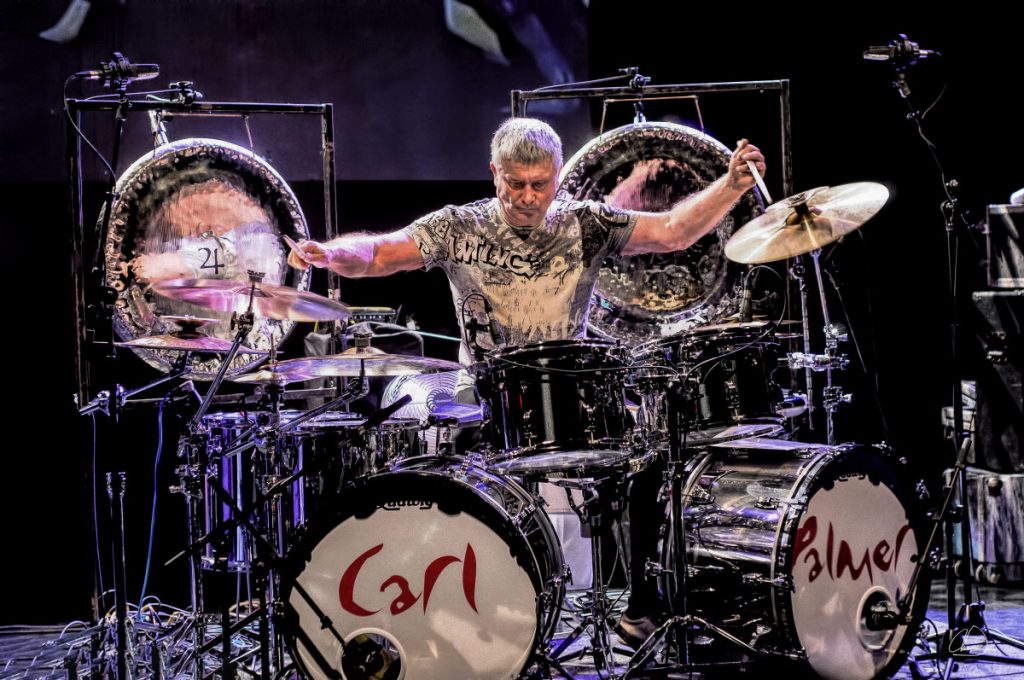
CARL PALMER
Carl Palmer is an English drummer best known as one of the most technically accomplished and influential figures in progressive rock. He began playing professionally in the mid-1960s in the UK Midlands, quickly building a reputation for precision, speed, and a style shaped heavily by jazz-influenced drummers such as Buddy Rich and Gene Krupa. Early in his career he played with local bands and then joined Chris Farlowe’s Thunderbirds, which helped establish him in the British rock scene.
In 1969, Palmer briefly joined The Crazy World of Arthur Brown, and soon after co-founded Atomic Rooster with keyboardist Vincent Crane. That band helped him gain wider attention, especially in the emerging progressive rock movement. His major breakthrough came in 1970 when he joined Emerson, Lake & Palmer, a progressive rock “supergroup” with Keith Emerson and Greg Lake. With ELP, Palmer became internationally known for his powerful, highly structured drumming and extended live solos, helping define the symphonic and technically complex sound of 1970s prog rock. The group achieved major commercial and critical success with albums like Emerson, Lake & Palmer and Tarkus, and became one of the era’s defining live acts.
After ELP’s initial breakup in 1979, Palmer continued to expand his career into new commercial territory, most notably joining the 1980s supergroup Asia, which blended progressive musicianship with more radio-friendly rock and produced major hits and platinum-selling albums. He also worked on various side projects, session recordings, and collaborations, while maintaining a reputation for high-level musicianship and live performance energy.
ELP reunited in the 1990s, and Palmer continued performing with them until their final split. Following that, he focused on his own touring projects, including the Carl Palmer Band and later Carl Palmer’s ELP Legacy, where he performs classic ELP material with modern musicians while preserving the original compositions’ complexity. In recent years, he has continued touring and celebrating the legacy of progressive rock, remaining active well into the 21st century as one of its most enduring figures.
Across his career, Palmer is widely regarded as a benchmark drummer in rock history, known for combining classical precision, jazz technique, and rock power into a distinctive and highly influential style.
ALEX VAN HALEN
Alex Van Halen is best known as the powerhouse drummer and co-founder of the hard rock band Van Halen, formed in Pasadena, California in the early 1970s alongside his brother Eddie Van Halen. Originally trained on piano and guitar like his brother, Alex ultimately settled on drums, developing a forceful, precise, and highly energetic style that became a defining element of the band’s sound. His playing helped drive Van Halen’s rise from local club act to one of the most influential rock bands of the late 20th century.
Through the late 1970s and 1980s, Alex contributed to a string of landmark albums including their 1978 self-titled debut, 1984, Fair Warning, and 5150 after the lineup change that brought Sammy Hagar into the band. His drumming blended hard rock intensity with swing-like grooves and creative use of cymbal patterns, making tracks like “Hot for Teacher,” “Panama,” and “Jump” stand out for their rhythmic complexity and energy. Van Halen became one of the defining arena rock bands of the era, and Alex’s role as a foundational rhythm driver was central to their success.
The band was inducted into the Rock and Roll Hall of Fame in 2007, recognizing their lasting influence on rock music. Following Eddie Van Halen’s death in 2020, Alex largely stepped back from public performance and recording, focusing instead on preserving his brother’s legacy. In 2024, he released his memoir Brothers, which reflects on their upbringing, musical journey, and the deep personal and creative bond that shaped Van Halen’s career.
PHIL COLLINS
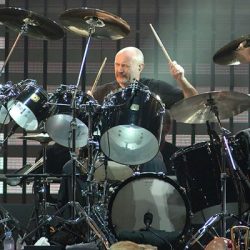
Phil Collins began his musical career in the late 1960s in London, first working as a child actor before shifting into music as a teenage drummer and performer. His breakthrough came in 1970 when he joined the progressive rock band Genesis as their drummer, quickly earning recognition for his inventive, highly expressive playing. During the early and mid-1970s, Genesis built a reputation as one of the leading acts in progressive rock, and Collins gradually contributed more vocals in addition to drumming.
A major turning point came in 1975, when lead singer Peter Gabriel left Genesis. Collins initially took over vocal duties temporarily, but his performance on the 1976 album A Trick of the Tail was so successful that he became the band’s permanent frontman. Under his leadership, Genesis shifted from complex progressive rock toward a more accessible, radio-friendly sound, producing major hits throughout the late 1970s and 1980s.
While still active with Genesis, Collins launched a solo career in the early 1980s that quickly surpassed even the band’s commercial success. His debut solo single “In the Air Tonight” became an iconic hit, followed by a string of massively successful albums such as Face Value and No Jacket Required. These records produced numerous chart-topping singles and established him as one of the defining pop artists of the 1980s.
Throughout the 1980s and 1990s, he maintained a rare dual career, achieving global success both with Genesis and as a solo artist. He also expanded into film work, notably writing and performing music for Disney’s Tarzan, including the Oscar-winning song “You’ll Be in My Heart.” After leaving Genesis in 1996 to focus on solo work, he later reunited with the band for tours and continued to perform and release music into the 2000s and beyond. Over time, Collins became known not only as a drummer and singer but as one of the most commercially successful and influential pop-rock artists of his generation.
JOHN BONHAM
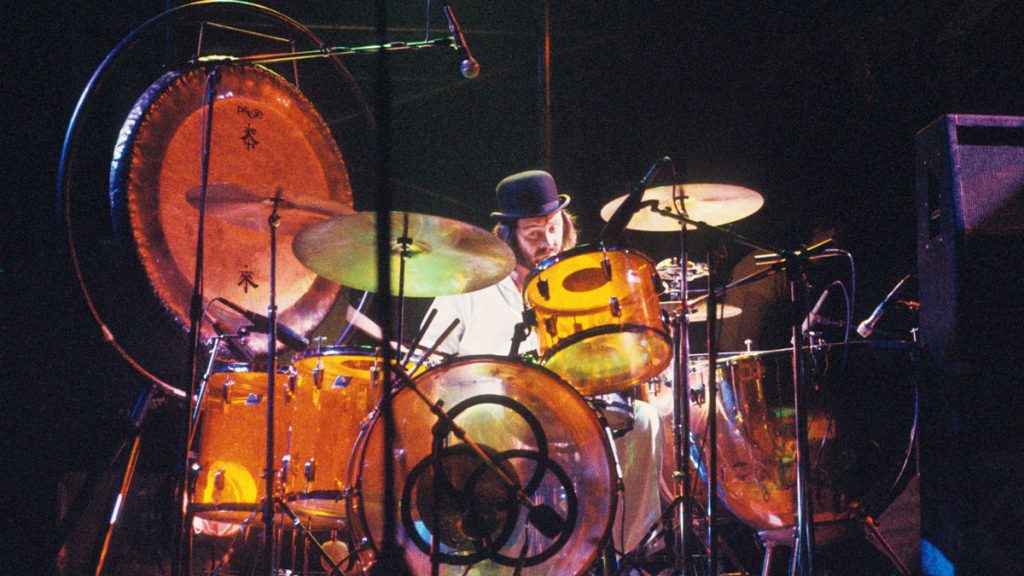
John Bonham was an English rock drummer best known for his work with Led Zeppelin, where he served as the group’s powerhouse rhythm foundation from its formation in 1968 until his death in 1980. He began playing drums as a child in Redditch, England, using improvised kits before receiving his first proper snare drum at age 10 and a full drum set in his teens. In the early 1960s he played with several local bands, steadily building a reputation for his loud, precise, and deeply groove-oriented style influenced by jazz greats like Gene Krupa and Buddy Rich.
Before joining Led Zeppelin, Bonham performed in groups such as Band of Joy, where he played alongside Robert Plant, a collaboration that would later prove pivotal. In 1968, Jimmy Page recruited him after forming what became Led Zeppelin, and Bonham’s addition completed the lineup with John Paul Jones and Plant. From there, he became central to the band’s identity, shaping its heavy, driving sound on landmark albums like Led Zeppelin IV and Physical Graffiti. His drumming was notable for its combination of raw power, intricate timing, and feel, with performances like the extended solo “Moby Dick” showcasing his technical endurance and creativity.
Throughout the 1970s, Bonham’s reputation grew as Led Zeppelin became one of the biggest rock acts in the world, with his sound helping define hard rock and influencing later genres like heavy metal. He remained with the band until his death in 1980, after which Led Zeppelin disbanded. Over time, he has been widely regarded as one of the most influential drummers in rock history, with his legacy continuing to shape generations of musicians.
MITCH MITCHELL
Mitch Mitchell was a British drummer best known for his work with the Jimi Hendrix Experience, where his jazz-influenced, highly energetic style became a defining part of the band’s sound. Before meeting Hendrix, he built his early career in the UK playing in rhythm and blues and pop groups, gaining experience as a session drummer and working with bands such as Georgie Fame and the Blue Flames, where his loose, improvisational approach began to stand out.
In late 1966, Mitchell was recruited into the Jimi Hendrix Experience after auditioning in London, and he quickly became a crucial creative partner in the trio alongside Hendrix and bassist Noel Redding. His playing on the group’s landmark albums, including Are You Experienced, Axis: Bold as Love, and Electric Ladyland, blended jazz technique with rock power, using swinging fills, rapid snare work, and improvisational phrasing that often pushed Hendrix’s guitar playing into more explosive directions. Rather than simply keeping time, Mitchell treated the drums as a lead instrument, helping shape the band’s dynamic, unpredictable sound.
After the Experience initially broke up in 1969, Mitchell continued working with Hendrix in various configurations, including the Woodstock performance and later touring versions of the group featuring Billy Cox on bass. Following Hendrix’s death in 1970, Mitchell remained active in music, participating in posthumous Hendrix recordings and production work, and later playing with several short-lived projects such as Ramatam and other collaborations with well-known rock and jazz musicians. Over the following decades he performed intermittently, often in Hendrix-related tribute settings, while maintaining a lower public profile.
RINGO STARR (SIR RICHARD STARKEY)
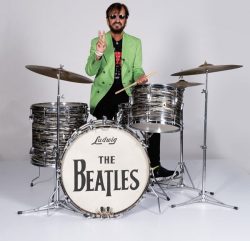
Ringo Starr began his musical career in Liverpool in the late 1950s, playing in local skiffle and rock groups, most notably Rory Storm and the Hurricanes, where he built a reputation as a steady, musical, and dependable drummer. In 1962 he was invited to join The Beatles, replacing Pete Best, a move that became one of the most important lineup changes in popular music history. With The Beatles, Starr’s drumming became a defining part of the band’s sound; rather than focusing on flashy technique, he emphasized feel, timing, and song-first playing, contributing to classics across albums from Please Please Me through Abbey Road. He also occasionally stepped forward as a vocalist and songwriter, singing lead on songs like “With a Little Help from My Friends” and “Yellow Submarine,” and writing “Don’t Pass Me By” and “Octopus’s Garden.”
After The Beatles broke up in 1970, Starr immediately launched a solo career with albums like Sentimental Journey and Beaucoups of Blues, exploring traditional pop and country influences. His 1973 album Ringo became his most commercially successful solo work, producing major hit singles such as “Photograph” and “You’re Sixteen,” and establishing him as a successful solo artist in his own right. Over the following decades he continued releasing albums regularly, often collaborating with major musicians, and he also formed Ringo Starr & His All-Starr Band, a rotating live group that brought together well-known rock artists for touring performances. Across his career, he has remained active as a recording artist, performer, and cultural figure, while being widely recognized for his distinctive, economical drumming style and lasting influence on modern rock music.
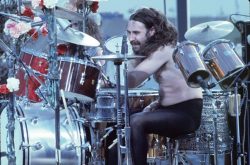
BILL WARD
Bill Ward is best known as the original drummer and a founding member of Black Sabbath, the Birmingham band that helped define heavy metal in the late 1960s and 1970s. Born in 1948, he developed his drumming style early, influenced by jazz and swing players like Gene Krupa and Buddy Rich, which later gave his playing a more fluid and expressive feel compared to many rock drummers of his era .
In the mid-1960s, Ward played in several local bands and eventually teamed up with guitarist Tony Iommi in a group called Mythology. After that project dissolved, Ward joined forces with Ozzy Osbourne and Geezer Butler, forming first Earth and then Black Sabbath in 1969. The band quickly became one of the most influential rock groups in history with landmark albums like Black Sabbath and Paranoid, where Ward’s drumming stood out on tracks such as “Rat Salad,” which featured one of his signature drum solos .
Throughout the classic era of Black Sabbath, Ward contributed not only as a drummer but occasionally as a vocalist and songwriter, showing a wider musical range than many of his peers. He remained with the band through its most celebrated lineup and several key lineup changes, although his time was often interrupted by departures and reunions. Personal struggles and health issues affected his consistency later in his career, leading to breaks from the band during the 1980s and beyond.
After his initial departure from Black Sabbath in the early 1980s, Ward pursued other projects and eventually launched a solo career in the late 1980s. His 1990 solo album Ward One: Along the Way featured guest appearances from musicians including Ozzy Osbourne and showcased his interest in blending hard rock with experimental and diverse styles. He later released additional solo material in the 1990s and 2010s, including When the Bough Breaks and Accountable Beasts, continuing to highlight his creative range outside of Sabbath.
Ward has also been involved in later Black Sabbath reunions and special performances, including the band’s final-era projects in the 2010s and farewell appearances in the 2020s, reinforcing his legacy as one of heavy metal’s foundational drummers.
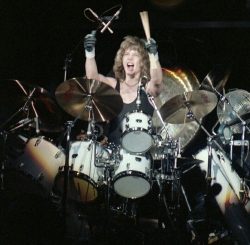
CLIVE BURR
Clive Burr was an English rock drummer best known for his early role in the heavy metal band Iron Maiden during the formative years of their career. Before joining the band, he played in the pub and club circuit around London and was a member of the group Samson, where he gained attention as part of the emerging New Wave of British Heavy Metal scene. In late 1979, he joined Iron Maiden at the recommendation of guitarist Dennis Stratton, just as the band was preparing to record their debut album.
Burr’s most significant work came with Iron Maiden’s first three studio albums: Iron Maiden (1980), Killers (1981), and The Number of the Beast (1982). His drumming helped define the band’s early sound, combining speed, power, and a loose, energetic feel that stood out on tracks like “Run to the Hills” and “The Prisoner.” He also contributed creatively, co-writing “Gangland” and having his composition “Total Eclipse” later released as a B-side. His performances during this era are often credited with helping establish Iron Maiden as one of the leading acts in heavy metal.
In 1982, Burr was dismissed from Iron Maiden during the “Beast on the Road” tour and replaced by Nicko McBrain. After leaving the band, he continued to work with other groups, including Trust, Alcatrazz, and the short-lived supergroup Gogmagog, though he never again reached the same level of prominence as he had with Iron Maiden.
Later in life, Burr was diagnosed with multiple sclerosis, which progressively ended his ability to perform. Iron Maiden supported him through benefit shows and the creation of a trust fund in his name. He died in 2013 at the age of 56, but his legacy endures through his influential recordings with Iron Maiden, which remain widely regarded as foundational to modern heavy metal drumming.
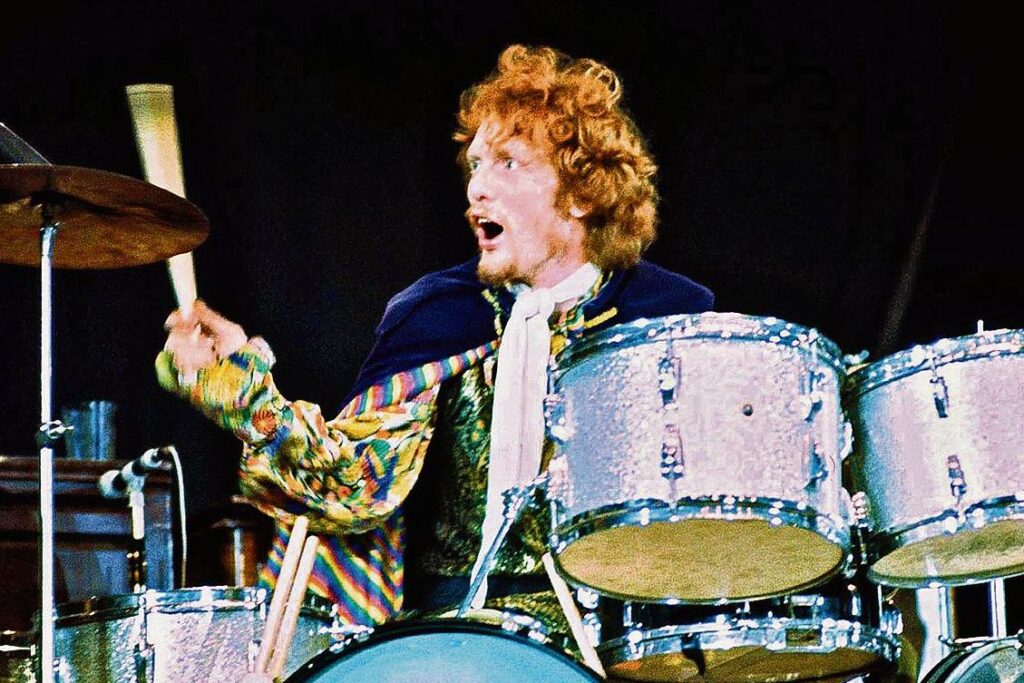
GINGER BAKER
Ginger Baker, born Peter Edward Baker in 1939 in London, was one of the most influential and distinctive drummers in rock music history, known for blending rock, jazz, and African rhythms into a highly expressive and often unpredictable style. He first emerged in the early 1960s on the British blues and jazz scene, playing with groups like Alexis Korner’s Blues Incorporated and the Graham Bond Organization, where his partnership—and frequent clashes—with bassist Jack Bruce began to define his early reputation.
His major breakthrough came in 1966 when he co-founded Cream with Eric Clapton and Jack Bruce, widely regarded as one of the first “supergroups.” Cream became hugely successful in a short time, producing landmark albums such as Fresh Cream, Disraeli Gears, and Wheels of Fire. Baker’s explosive drumming, extended solos, and use of dual bass drums helped redefine what rock percussion could be, most famously on tracks like “Toad,” one of the earliest recorded extended drum solos in rock.
After Cream disbanded in 1968 due to internal tensions, Baker briefly worked in Blind Faith with Clapton and Steve Winwood, then formed Ginger Baker’s Air Force, a large ensemble that mixed rock, jazz, and orchestral elements. In the early 1970s he shifted direction significantly by moving to Nigeria, where he immersed himself in African music, collaborated with Fela Kuti, and even established a recording studio in Lagos, deepening his lifelong interest in rhythmic traditions outside Western rock.
Throughout the 1970s and 1980s, Baker remained active through a wide range of projects, including Baker Gurvitz Army, collaborations with jazz and experimental musicians, and stints with bands like Hawkwind and Public Image Ltd. In later years, he returned periodically to high-profile collaborations, most notably the 2005 Cream reunion concerts with Clapton and Bruce, which revisited his most famous work.
By the 2000s and 2010s, Baker had largely become a legendary elder figure in both rock and jazz circles, admired for his innovation and feared for his volatile personality. He continued performing and collaborating in various forms until his health declined in the mid-2010s. He died in 2019, leaving behind a legacy as a pioneering drummer who helped bridge jazz improvisation, rock power, and African rhythmic influence into a single, groundbreaking style.
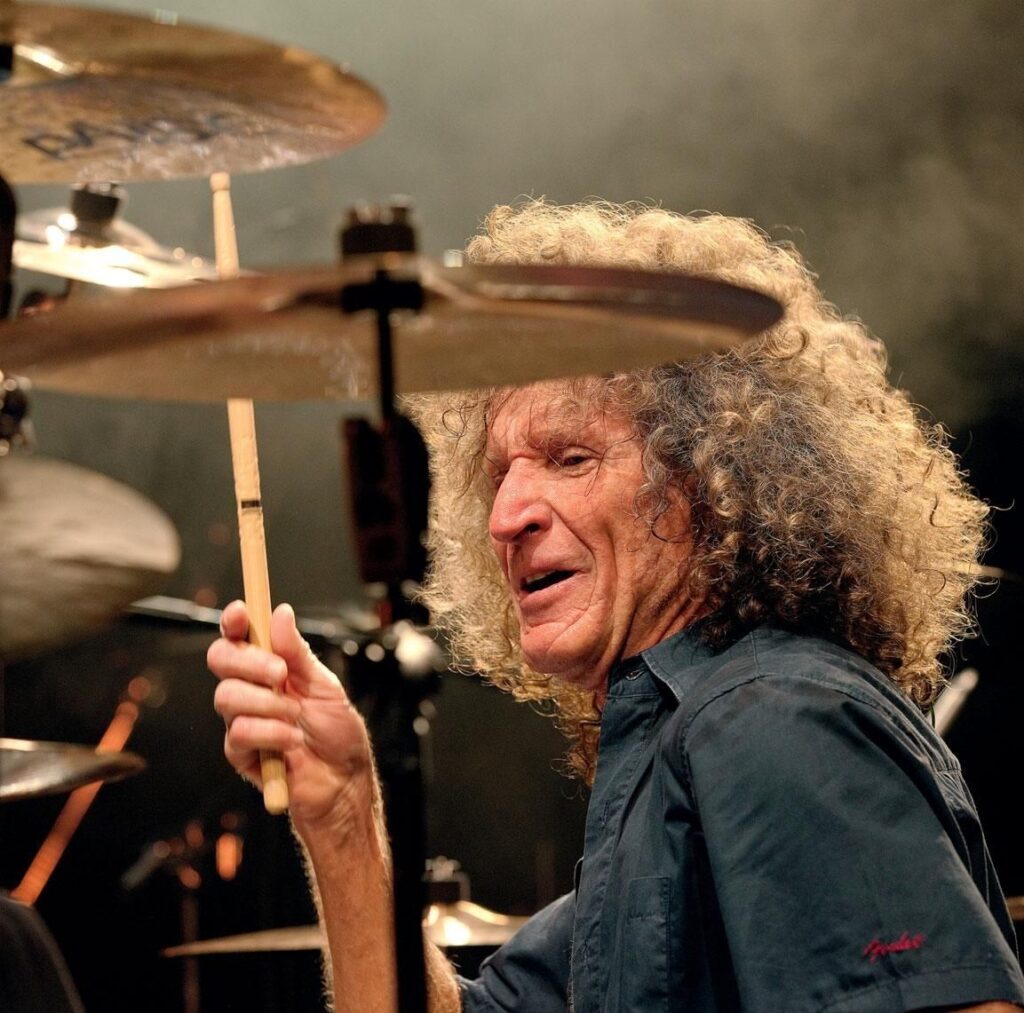
TOMMY ALDRIDGE
Tommy Aldridge is widely regarded as one of the most influential hard rock and heavy metal drummers of his generation. A self-taught musician, he launched his professional career in the early 1970s with Black Oak Arkansas, where his powerful playing and pioneering use of double bass drums helped establish his reputation. He later became a sought-after session and touring drummer, performing and recording with major rock artists including Ozzy Osbourne, Pat Travers, Gary Moore, Whitesnake, Thin Lizzy, Ted Nugent, and Yngwie Malmsteen. Aldridge’s explosive style, technical precision, and energetic live performances made him a defining figure in rock drumming, particularly during the 1980s metal boom. Beyond recording and touring, he has remained active as a drum clinician and educator, influencing generations of drummers through clinics, instructional materials, and decades of live performances. With a career spanning more than five decades, Tommy Aldridge continues to be recognized as one of rock music’s most respected and enduring drummers.

NICK MASON

BILL BRUFORD
Bill Bruford is widely regarded as one of the most influential drummers in progressive rock, celebrated for his technical precision, inventive rhythms, and ability to blend rock, jazz, and experimental music. He co-founded Yes in 1968 and played on landmark albums including The Yes Album, Fragile, and Close to the Edge, helping define the band’s sophisticated sound. In 1972, he made the surprising decision to leave Yes at the height of its success to join King Crimson, where his adventurous drumming became a key element of classics such as Larks’ Tongues in Aspic, Starless and Bible Black, and Red. Throughout the 1970s and 1980s, Bruford also performed with artists and groups including Genesis, U.K., and his own band, Bruford, while later pioneering the use of electronic drums during King Crimson’s 1980s revival. In 1986, he shifted his primary focus to jazz by forming the band Earthworks, further showcasing his versatility as a composer and improviser. After retiring from full-time performance in 2009, he earned a doctorate in music, wrote extensively on creativity and performance, and was inducted into the Rock and Roll Hall of Fame as a member of Yes in 2017. He has since returned to occasional live performances, continuing to influence generations of drummers with his innovative approach to rhythm and musical expression.
I am NOT saying these are the best drummers out there. I am only saying I like these drummers the most, and their playing had been influential in my drumming. There are two other drummers that deserve honorable mentions on my page.
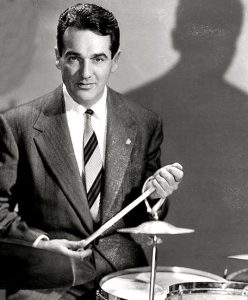
GENE KRUPA
The first is my personal drum hero. A Chicago boy, Gene Krupa had completely transformed both the drum set and the drummer into what we know them to be today. He helped Slingerland Drums produce a tunable tom tom, helping pave the way for modern drum sets with their numerous toms. Gene also helped the drummer step out into the spotlight and promoted the drums as a solo instrument. Drummers would not be who we are today if it was not for Gene Krupa.
BUDDY RICH
The second drummer is Buddy Rich. I was always enthralled watching him blast his way around a drum set on numerous Johnny Carson Shows in the 1970s. I believe Buddy made me want to become a drummer. Although to be fair, I was already one, playing in the school band. I am sure me playing the drums was the impetus for me wanting to watch Buddy Rich. However, I was only a percussionist at that point really, playing a single instrument at a time.
I initially learned to play a drum set by listening to Steve Miller’s Greatest Hits. I do not really remember the exaact progression of drum mentors, but I listened to a lot of songs, and I tried to copy every one. I still try to copy songs as close to the original as possible to this day.
I learned how to play heavy metal drums with a double bass drum in 1983. I taught myself how to play double bass drums as YouTube did not exist then. I have since found out that heavy metal drums is considered the second hardest drum style to play, with jazz being the hardest. I guess that is because of the heavy beats and fast timing. I liked it, but do not consider myself a metal drummer.
During my forties, I discovered jazz. I have been hooked since, too. I love most forms of jazz, from early jazz, to swing and to bebop, I love the art that jazz is. However, I do not consider myself a jazz drummer by any stretch of the imagination. I have never learned how to play jazz drums, but one day I hope to change that.
About ten years ago, I watched a documentary about hip hop and realized that hip hop is ALL about rhythm, so for me what is there not to like? I learned that I prefer west coast gangsta rap (who would have thunk?). For me, some the best riffs I can create is when I listen to hip hop. It is fun as hell!